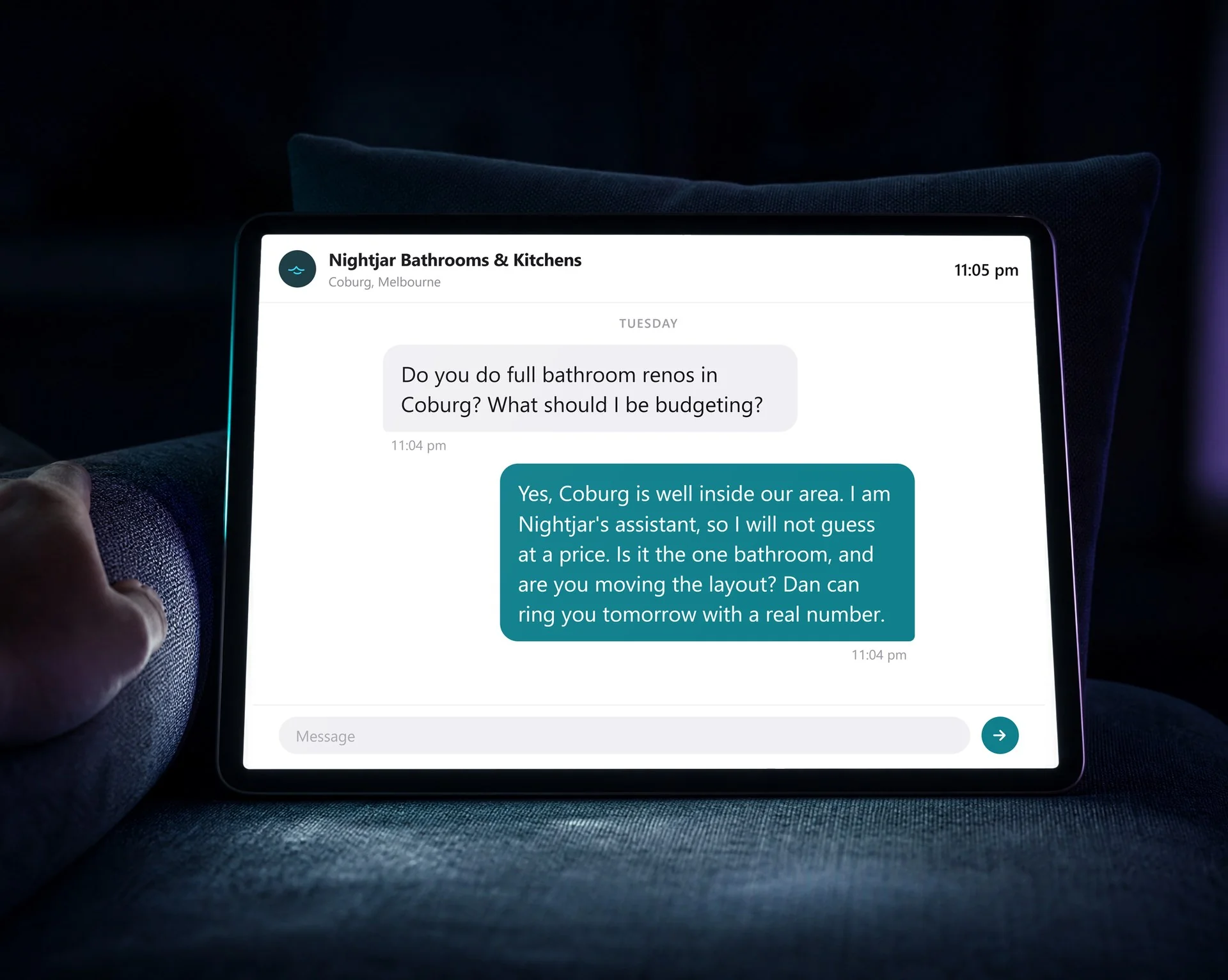
Whoever answers first usually wins the job, and most enquiries arrive when nobody is at a desk. The useful application of AI in a small business is not a novelty, it is wiring a fast, sensible reply into the enquiry pipeline you already have, so nothing sits until morning.
Practical Automation Rather Than Novelties
What an AI integration includes:
- Speed To Lead Responder
- After Hours Answering That Books Or Escalates, Rather Than Stalling
- Enquiry Qualification And Routing
- Follow Up Nobody Has To Remember
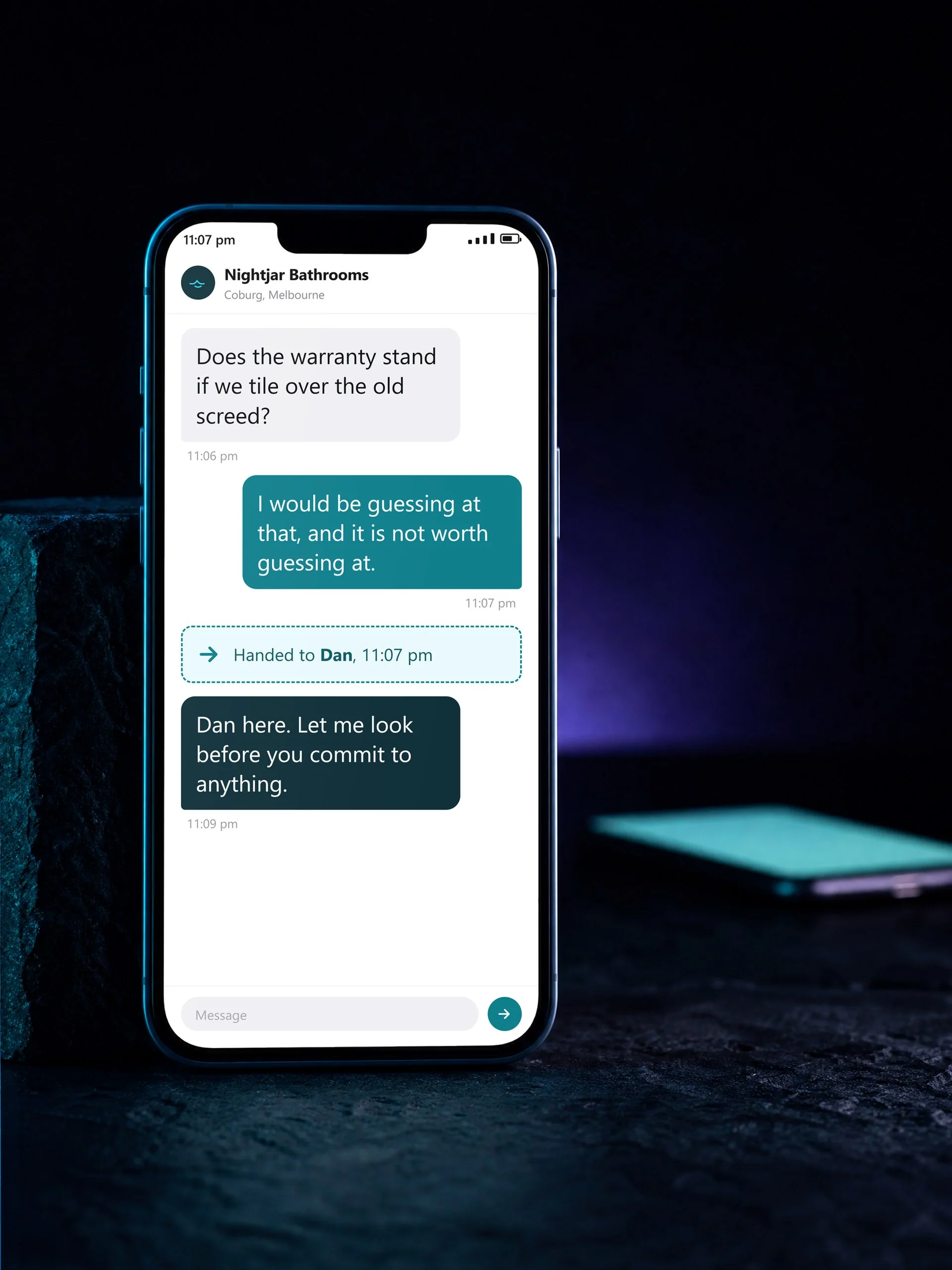
- Handover To A Human, Cleanly
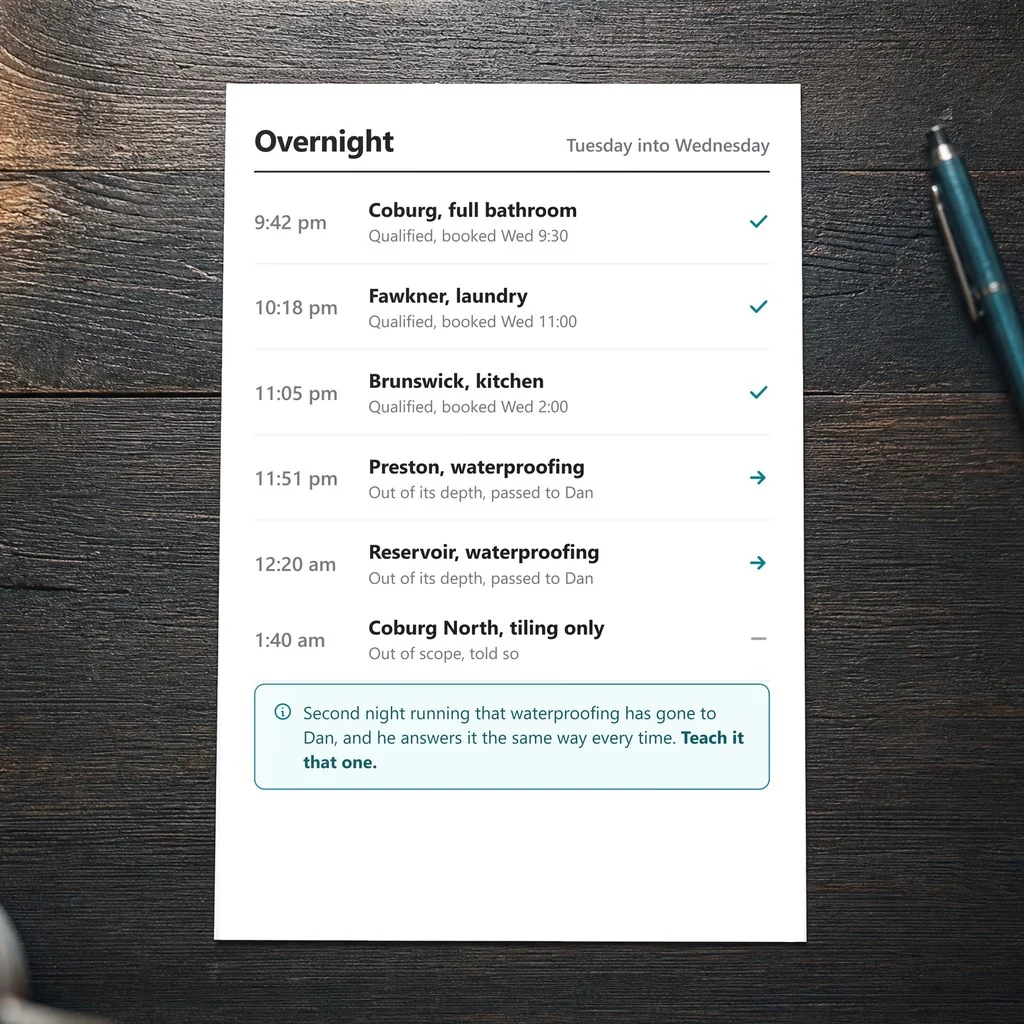
- Monthly Reporting

How the automation gets wired in
We start with the pipeline you already run, not with a product. The point is that a customer gets a straight answer in seconds at eleven at night, and that you get the ones worth ringing back in the morning. Anything that cannot pass as helpful does not go live.
Step 01
The Pipeline
Where enquiries arrive now, and what happens

Step 02
The Gaps
Where they go cold

Step 03
Build
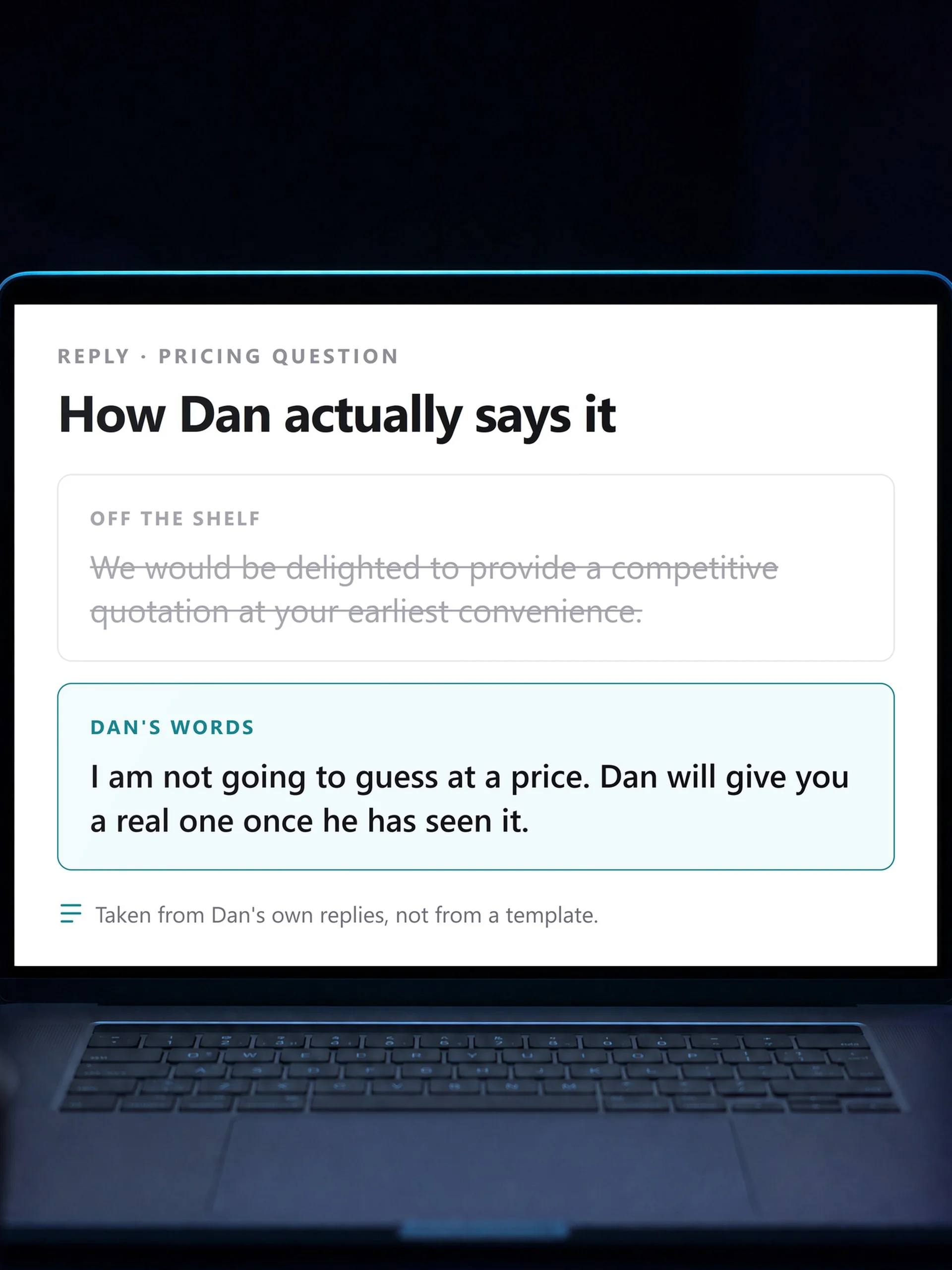
A responder that sounds like you
Step 04
Testing
Run against real enquiries before it answers anyone

Step 05
Live
Answering, with a way out
Step 06
Tuning
It gets better with use
The questions we get asked most
Not if it is built properly. It is written in your words, it is honest that it is an assistant, and it hands over to you the moment it is out of its depth.
It says so and passes the enquiry straight to you with everything it has already collected. A confident wrong answer is the one thing we design against.
No. In a business this size it does the part nobody was doing anyway, which is answering at eleven at night and following up on the ones that went quiet.
Yes, where your calendar allows it. For most trades it qualifies the enquiry and books the call rather than the job itself, which is the safer line.